Monday to Saturday - 8:00 -17:30

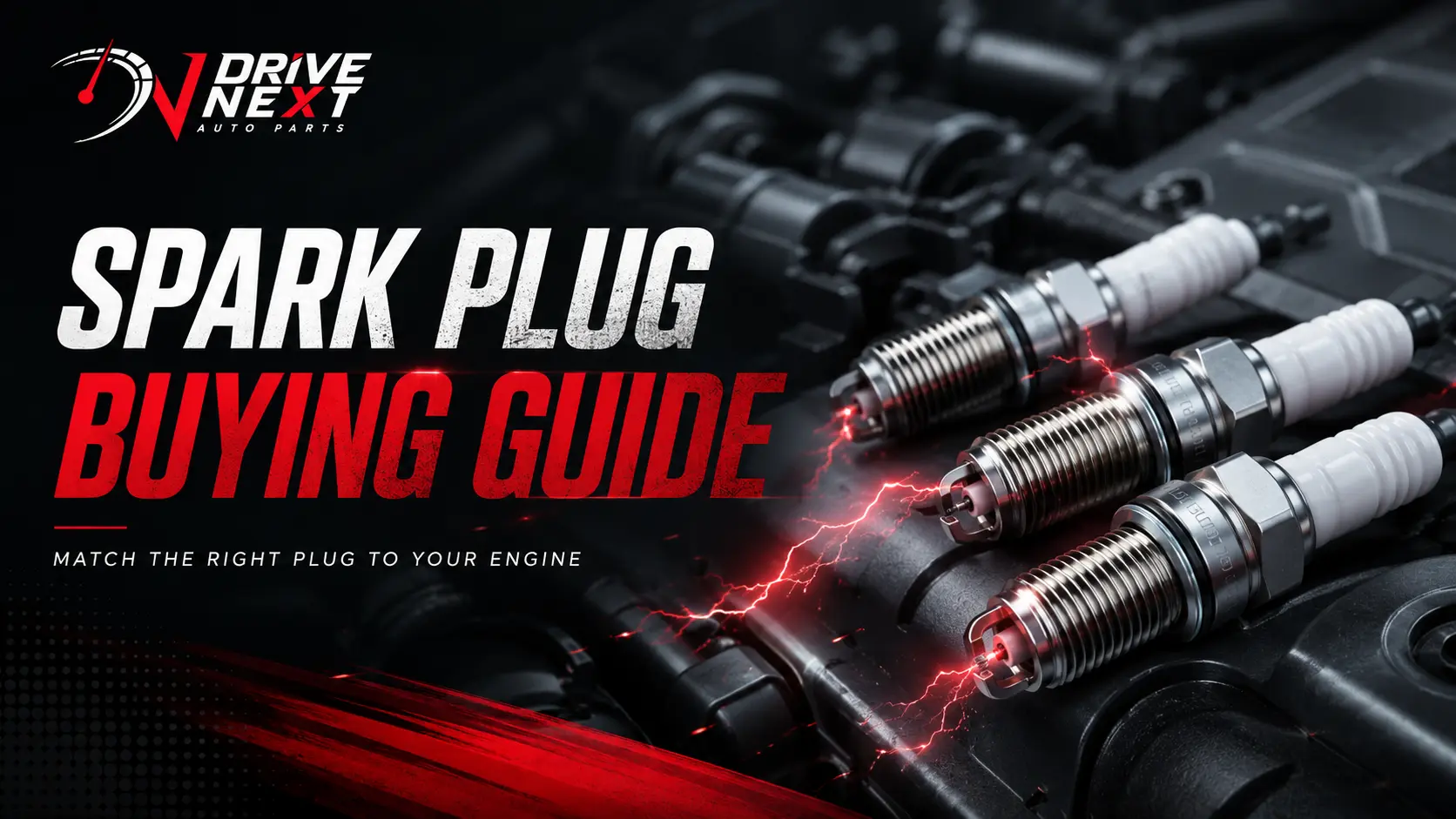
A spark plug looks like the simplest part in your engine bay. Screw it in, connect the coil, done. Except the wrong one can misfire your engine. It can foul out within a week. It can even strip threads that cost real money to fix. This spark plug buying guide walks through what actually separates one plug from another. The material. The heat range. The gap. The fitment. Get those four right and the part does its job quietly for years.
What a Spark Plug Actually Does
Every time the engine fires, the plug sends a tiny electrical arc across a gap between two electrodes. That arc ignites the compressed air-fuel mixture and pushes the piston down. It also pulls heat out of the combustion chamber and sends it toward the cylinder head. Two jobs at once, not one. A worn or mismatched plug struggles at both. You’ll feel it as rough idling, poor mileage, or a check engine light that won’t clear.
Copper, Platinum, or Iridium?
Spark plugs come in three common materials, and the difference isn’t just price.
Copper conducts electricity better than the other two and fires a strong spark from day one. That strength comes at a cost though. It’s the shortest lived of the three, typically good for 30,000 to 50,000 km before the electrode wears down.
Platinum gives up a little of that raw conductivity in exchange for durability. A disc welded onto the electrode holds its shape far longer, usually 95,000 to 160,000 km, and it runs slightly hotter too, which helps burn off carbon deposits.
Iridium takes things further still. Its electrode tip is a fraction of the size of a copper one, which concentrates the spark and improves ignition efficiency. The material also resists wear better than the other two, so most iridium plugs run 95,000 to 190,000 km depending on the engine.
Heat Range: The Part Most Buyers Skip
Heat range describes how quickly a plug moves heat away from its tip toward the cylinder head. It has nothing to do with spark strength. Hot plugs carry a longer ceramic insulator, so they hold onto heat longer, which is what helps burn off carbon during short trips and stop-start driving. Cold ones do the opposite. Shorter insulator, faster heat loss, better suited to engines running hard, like turbocharged or high-revving setups.
Fit the wrong range and the plug either fouls from carbon buildup or overheats and triggers pre-ignition. Both wear the engine down over time. Heat range numbers aren’t standardized across brands either. A “6” from one manufacturer doesn’t mean the same thing as a “6” from another. Always cross-reference against the OEM spec, not the number printed on the box.
Thread Size, Reach, and Gap
Physical fit matters just as much as material choice. Three things decide whether a plug actually belongs in your engine:
- Thread diameter: usually 10mm, 12mm, 14mm, or 18mm. Get the wrong one and it simply won’t seat, or worse, it cross-threads the cylinder head going in.
- Reach: the length of the threaded portion sitting inside the engine. A plug that’s too long can strike the piston. One that’s too short leaves the electrode buried too deep to fire cleanly.
- Gap: the tiny space between the center and ground electrode where the spark jumps. Most plugs ship pre-gapped from the factory, but it’s worth checking with a feeler gauge before installing, since shipping and handling can knock it slightly off.
Get any one of these wrong and you’ll notice it fast, usually as hard starts, misfires, or a rough idle.
Matching the Plug to Your Actual Vehicle
None of this works without knowing your specific engine. A Changan Alsvin typically ships from the factory with a copper plug tuned for its KF engine, though plenty of owners switch to a Changan Alsvin spark plug in iridium for the longer service life. Other Changan models, from the CS35 to the CS75 and Eado, run their own reach and thread specs, so picking any Changan Spark Plug off a generic listing isn’t a safe assumption across the range.
The same logic holds elsewhere. Kia and Jetour both run several engine families across their Dubai lineups, and thread size or heat range can shift between them even within the same model year. It’s worth checking kia spare parts or jetour spare parts against your exact engine code rather than guessing off the model name alone.
Signs You’re Overdue for a Change
A few signs usually mean a plug has worn out, or was never the right match to begin with:
- Rough or uneven idling.
- Delayed or hard starts.
- A sudden dip in fuel economy.
- A check engine light with a misfire code.
Left alone, a bad plug puts extra strain on the ignition coil and catalytic converter too, and both cost far more to replace than the plug itself.
This spark plug buying guide really comes down to four checks. Pick a material based on how long you actually want between changes. Confirm the heat range against your engine’s OEM spec, not the number printed on the box. Get the thread size and reach right for your cylinder head. Check the gap yourself instead of trusting the box got it right.
Match all four to your engine’s actual spec, not just the model name on the box, and you’ll get a part that starts clean and holds up for the long run. For a deeper look at how engine and trim variations affect part compatibility across brands, Car Spare Parts by Brand in Dubai: A Complete Guide covers that ground in more detail.