Monday to Saturday - 8:00 -17:30

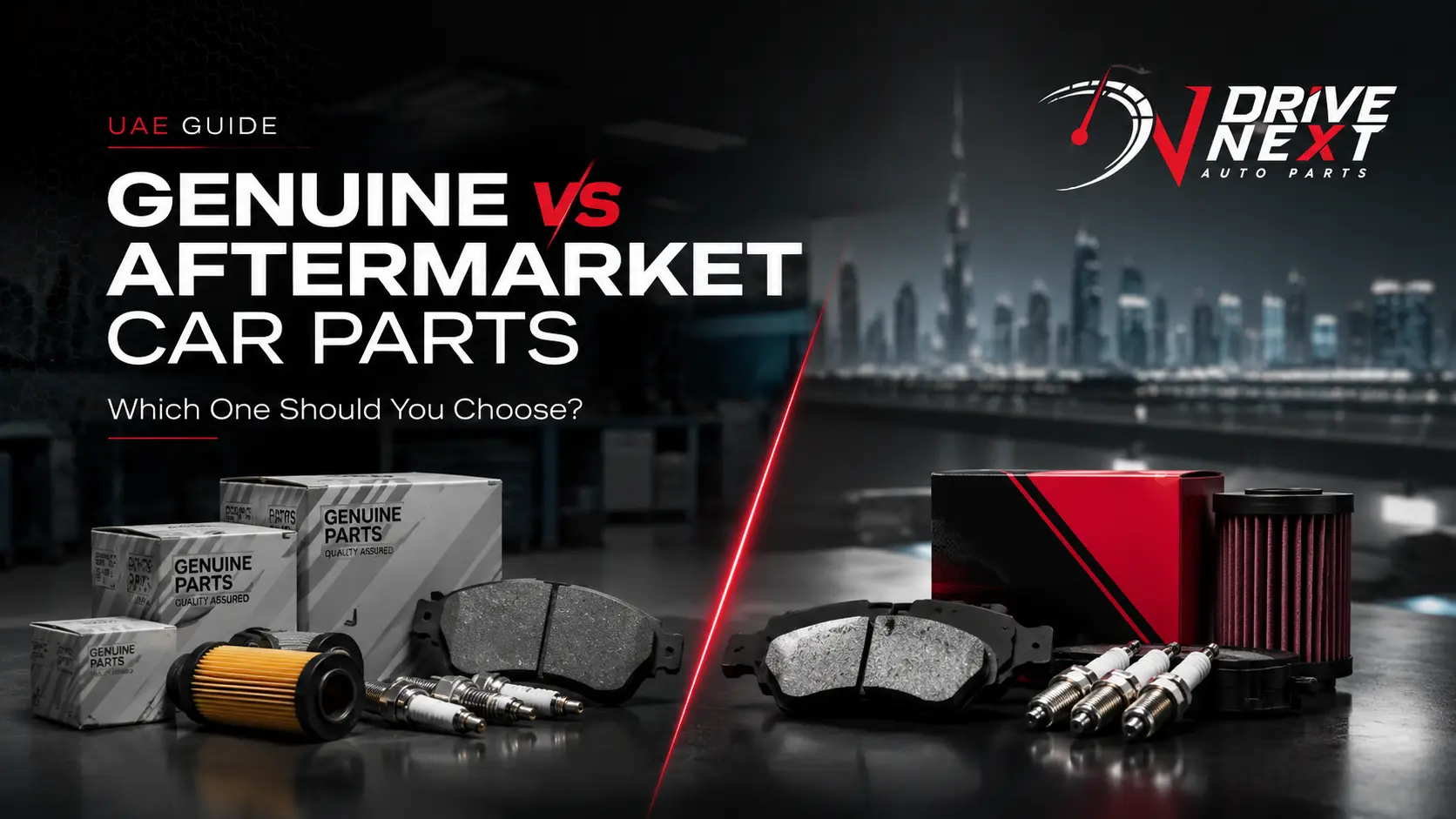
Anyone who’s had a part fail on their car in the UAE has run into this decision at the counter: pay more for the genuine part, or save money on an aftermarket version that claims to do the same job. This is the classic Genuine vs Aftermarket Car Parts in the UAE dilemma, and there’s no single right answer, but there is a right way to think about it, and that starts with understanding what you’re actually choosing between.
What Counts as a Genuine Part
A genuine part is made by, or on behalf of, the company that built your car. If you drive a Toyota, a genuine part comes through Toyota’s own supply chain and matches the exact specifications used on the factory line. Fitment is never in question, and the part usually carries the manufacturer’s warranty. The trade-off is price, since genuine parts almost always cost more than the alternative, sometimes by a significant margin.
What Counts as an Aftermarket Part
Aftermarket parts come from companies other than the original manufacturer, and quality across the group varies widely. Some brands manufacture to a standard that matches or even beats OEM specs, and workshops use them all the time without complaints. Others cut corners on materials and testing just to hit a lower price point. It really comes down to which specific brand you’re buying, not “aftermarket” as one big category.
It’s worth separating this from counterfeit parts, which is a different issue entirely. A legitimate aftermarket part is openly sold as a non-original alternative. A counterfeit part is dressed up to look like a genuine one and sold under false pretenses. Aftermarket can be a smart choice. Counterfeit never is.
Where the Real Differences Show Up
- Price: Genuine parts typically cost more, sometimes substantially, which matters most on older vehicles where resale value isn’t a major factor.
- Fitment: Genuine parts are built to one spec. Aftermarket parts vary by brand and sometimes by batch, so a slightly wrong fit is more likely with a lesser-known source.
- Warranty: If your vehicle is still under manufacturer warranty, fitting certain aftermarket parts, particularly for engine or safety-critical systems, can affect coverage on related components.
- Insurance: A handful of UAE car owners have found, after an accident, that a claim was reduced or denied because the parts involved were unverified or couldn’t be proven genuine.
Does the UAE’s Climate Change Calculation
Heat and dust put more strain on rubber, plastic, and sealing components than a milder climate does. Gaskets, hoses, and filters wear faster here, which means the margin for error on a marginal aftermarket part is smaller than it would be somewhere cooler. This doesn’t rule aftermarket out in the UAE; it just means the quality of the specific brand matters more here than it might elsewhere.
Making the Decision Without Getting Burned
Brakes, steering, and suspension are the systems worth spending on, whether that means genuine or a well-established aftermarket brand with a real track record. On the other hand, if a part failing just means an inconvenience rather than a safety issue, saving money with a trusted aftermarket option makes sense, as long as the supplier tells you plainly what you’re buying and stands behind it with a warranty.
Finding the Right Part, Genuine vs Aftermarket Car Parts
Wherever you land on this decision, sourcing from a supplier who’s transparent about what they’re selling makes the whole process easier. At DriveNext Auto Parts, we stock both genuine and carefully selected aftermarket components and tell you plainly which one you’re getting before you buy, whether you’re browsing our full range of auto spare parts in Dubai drivers rely on or looking for something specific like Toyota spare parts or Honda spare parts. If you’re not sure which option makes sense for your repair, reach out to our team and we’ll help you weigh it up before you spend a dirham.
FAQs:
Is aftermarket the same as fake or counterfeit?
No, Aftermarket parts are legally manufactured by a company other than the original carmaker and sold openly as such. Counterfeit parts imitate a genuine part and are sold under false branding. That’s a fraud problem, and it has nothing to do with whether a legitimate aftermarket part is any good.
Will aftermarket parts void my car’s warranty in the UAE?
It depends on the part and your specific warranty terms. Some manufacturer warranties just exclude the component that failed because of the aftermarket part and leave the rest of the vehicle’s coverage alone. Check your warranty documentation or ask your dealer instead of guessing.
Are aftermarket parts always lower quality?
No, quality comes down to the brand. Some established aftermarket manufacturers meet or beat OEM standards. Lesser-known brands are where corners tend to get cut. Look into the specific brand before you buy, since the category alone won’t tell you much.
How can I tell if a supplier is selling genuine parts?
Ask directly whether a part is genuine or aftermarket before you buy. Check the packaging and part numbers, and watch out for prices well below market rate. If a supplier dodges a straight question about what they’re selling, that tells you more than the price tag does.